
written by
Matthew Schroeder
Turkey begins on its own terms. Ferries cross the Bosphorus with gulls behind them, small tea glasses land on tabletops with a clean clink, and somewhere close, a vendor tears open a warm sesame-crusted simit. The skyline changes as you move, with palace silhouettes, minarets, apartment balconies, and the broad strait between continents all sharing the frame.
Istanbul, Cappadocia, Ephesus, and Bodrum cover more territory than most visits can reasonably hold. Together, they carry travelers through eras as much as geography, from Byzantine domes and Ottoman bathhouses to hidden settlements and marble streets, before ending along the Aegean with a boat day, a quiet cove, and nowhere in particular to be.
FOUNDED ON CONQUEST
Istanbul concentrates an extraordinary sweep of history in one neighborhood. Hagia Sophia, the Blue Mosque, Topkapi Palace, and the Grand Bazaar sit within easy reach of one another, each tied to the setting in a different way.
Hagia Sophia can anchor this part of the itinerary on its own. Finished between 532 and 537 under Byzantine Emperor Justinian I, it stood for ages as one of the Christian world’s defining churches before Mehmed II converted it for Muslim prayer after entering Constantinople in 1453. It became a museum in 1935 and reopened for prayer in 2020. That timeline is important, but its force reaches beyond dates. The history comes through in the vast interior, the dome high above the nave, the marble, the calligraphy, and the surviving mosaics from its Byzantine period.
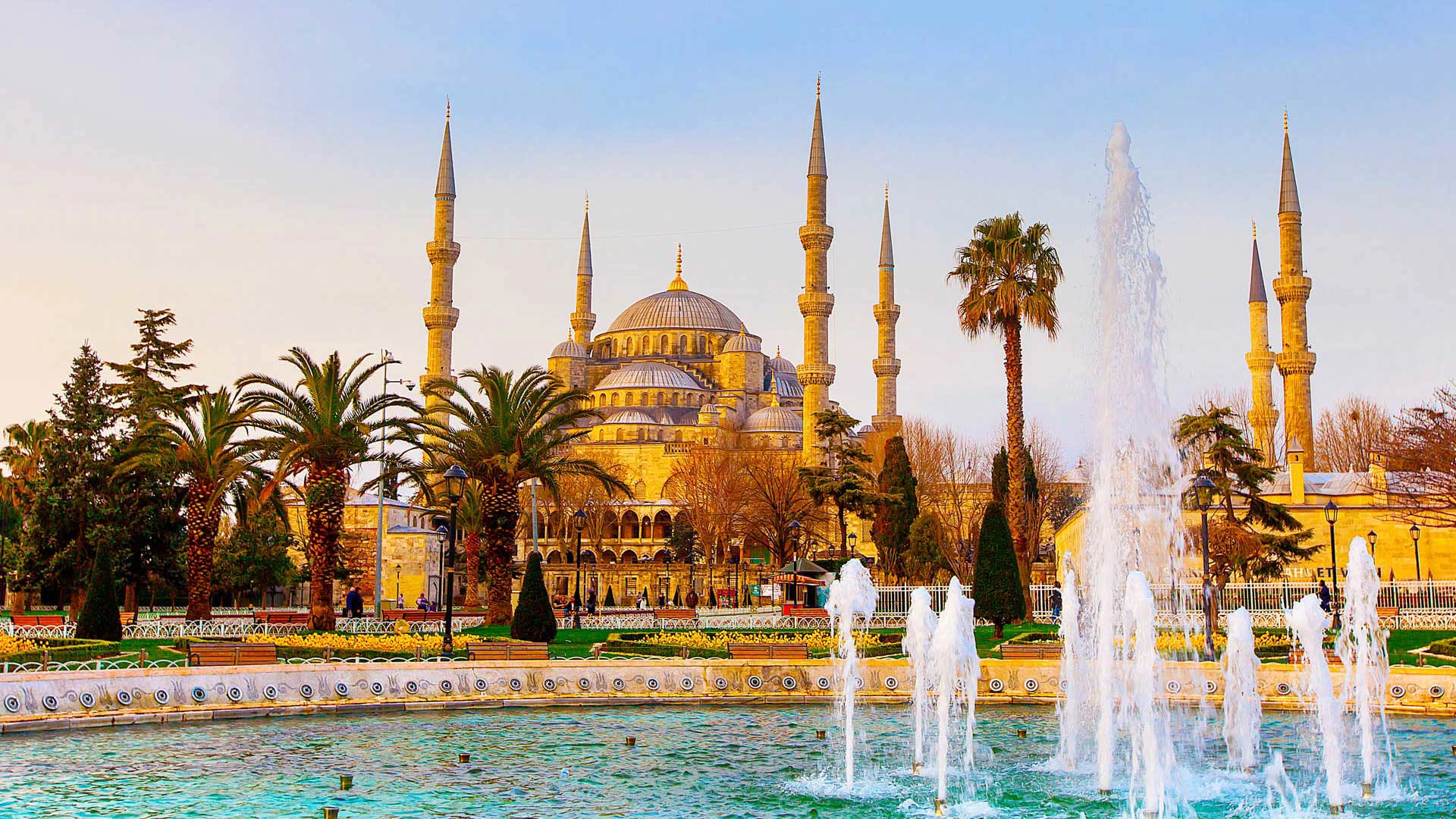
On the other side of Sultanahmet Square, the mosque of Sultan Ahmed answers with its own form of grandeur. As an active house of worship, it is known for its six minarets, cascading domes, and İznik tiles, giving visitors direct contact with Ottoman religious architecture rather than a monument sealed off from use. Topkapi Palace moves attention from worship to power. Its courtyards, treasury, kitchens, harem, and ceremonial chambers show how the Ottoman court managed ceremony, private quarters, wealth, and daily operations in one sprawling complex.
The Grand Bazaar pulls commerce into the picture. Its covered lanes are no longer the only place to shop, but they preserve the trading culture that helped define Istanbul. Carpets, ceramics, jewelry, and practiced salesmanship still carry that energy. Taken together, these landmarks explain why Sultanahmet is so central. Faith, empire, and commerce have shared the same streets here.
With so much history concentrated in one area, your hotel choice carries extra weight in Istanbul. Sanasaryan Han, a Luxury Collection Hotel, Istanbul, is ideal for these first days because it puts you in the Old City near Sultanahmet. The property has 51 rooms and 12 suites, with high ceilings, generous proportions, contemporary Turkish details, and bathrooms inspired by local bathing traditions. The result is a refined address beside the main sites while acknowledging the architecture and rituals that distinguish this city.
THE BATHHOUSE TRADITION
A Turkish hammam deserves a place on your itinerary, especially in Istanbul, where the ritual brings bathing custom, architecture, and everyday life into one experience. Many celebrated examples developed during the Ottoman era as civic institutions tied to mosques, charitable foundations, and public use. Inside, the design does much of the teaching, with domed halls, heated stone, copper bowls, and a gradual movement from hot rooms to cooler chambers. Çemberlitaş, commissioned by Nurbanu Sultan, wife of Selim II and mother of Murad III, was completed in 1584 and is associated with Mimar Sinan. Cağaloğlu, opened in 1741, is often described as among the last notable examples built for the imperial city.
The ritual is wonderfully direct. Guests step inside, change into a peshtemal, a thin woven cotton wrap traditionally striped or checked, settle onto the central slab, and let the pace slow. A classic service usually includes warming the body, a kese mitt scrub, a foam wash or massage, and sherbet or tea afterward. Some prefer an attendant for the ceremony; others reserve a shorter version. Select a respected address, know the format in advance, and leave breathing room before returning to the street. Plan the hammam after Sultanahmet, the Grand Bazaar, or a long walk through the Old City. It provides a needed break from sightseeing, with enough time to cool down, change, and return to the hotel before heading back out.
CARVED BY WIND
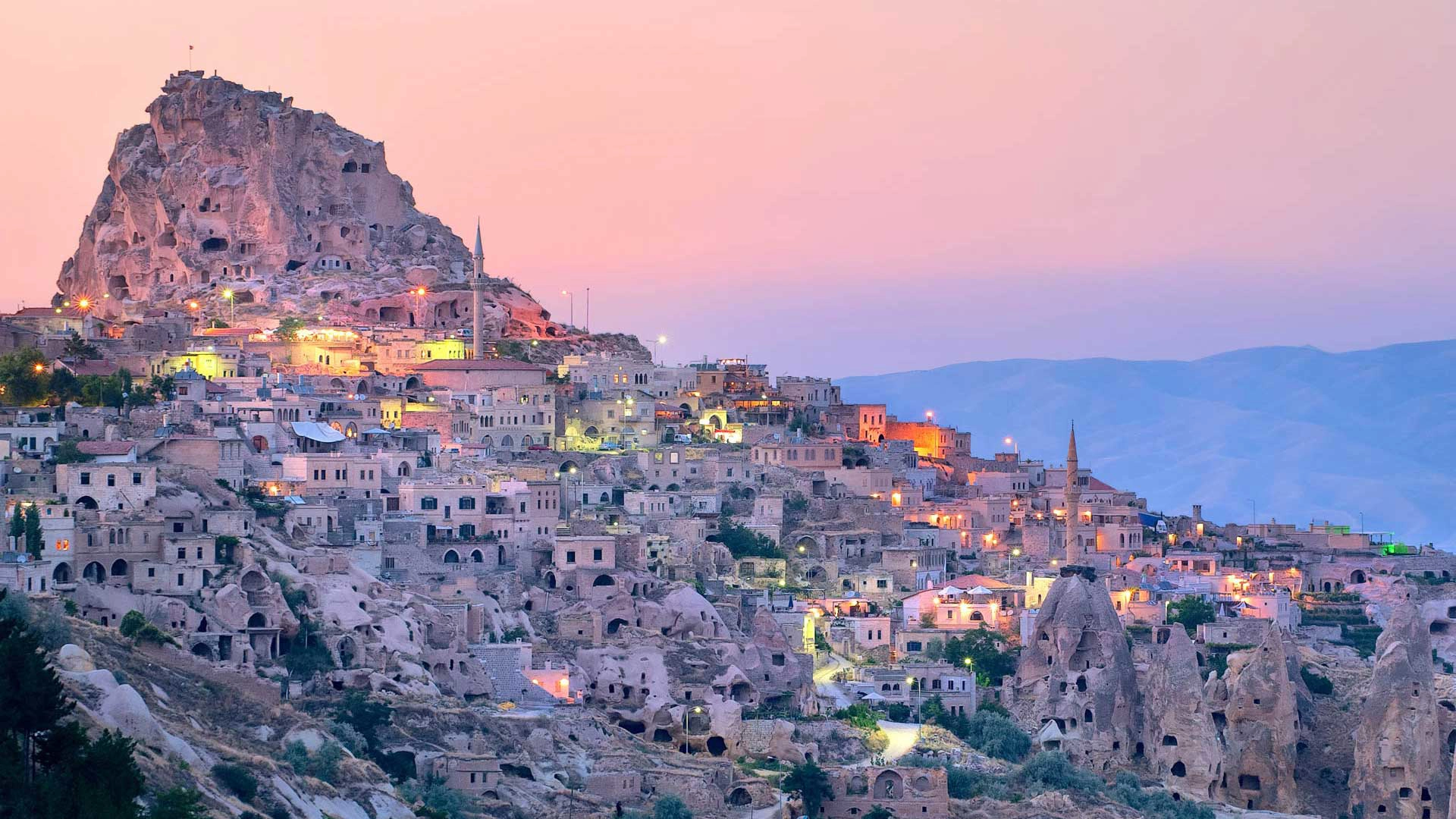
No photograph fully prepares you for Cappadocia. The familiar pictures are everywhere – color over dawn, ochre folds, and fairy chimneys caught in improbable formations. In person, the formations have more detail and variation than the familiar images can capture.
The terrain begins with volcanic geology. Mount Erciyes and Mount Hasan once covered the plateau with ash, which hardened into soft tuff before rain and air eroded it into the cones and ridges visible today. Early residents turned that material to extraordinary use. Derinkuyu, the country’s largest excavated subterranean settlement, descends nearly 280 feet beneath the surface and had capacity for as many as 20,000 people, with stables, grape presses, chapels, ventilation shafts, and rolling doors that sealed off sections from within. Its earliest chambers are usually attributed to the Phrygians in the 8th or 7th century BC, while later groups, including Byzantine Christians seeking refuge during conflict, enlarged the complex. The site was rediscovered in 1963, when a homeowner renovating nearby broke through a wall and uncovered part of the network below.
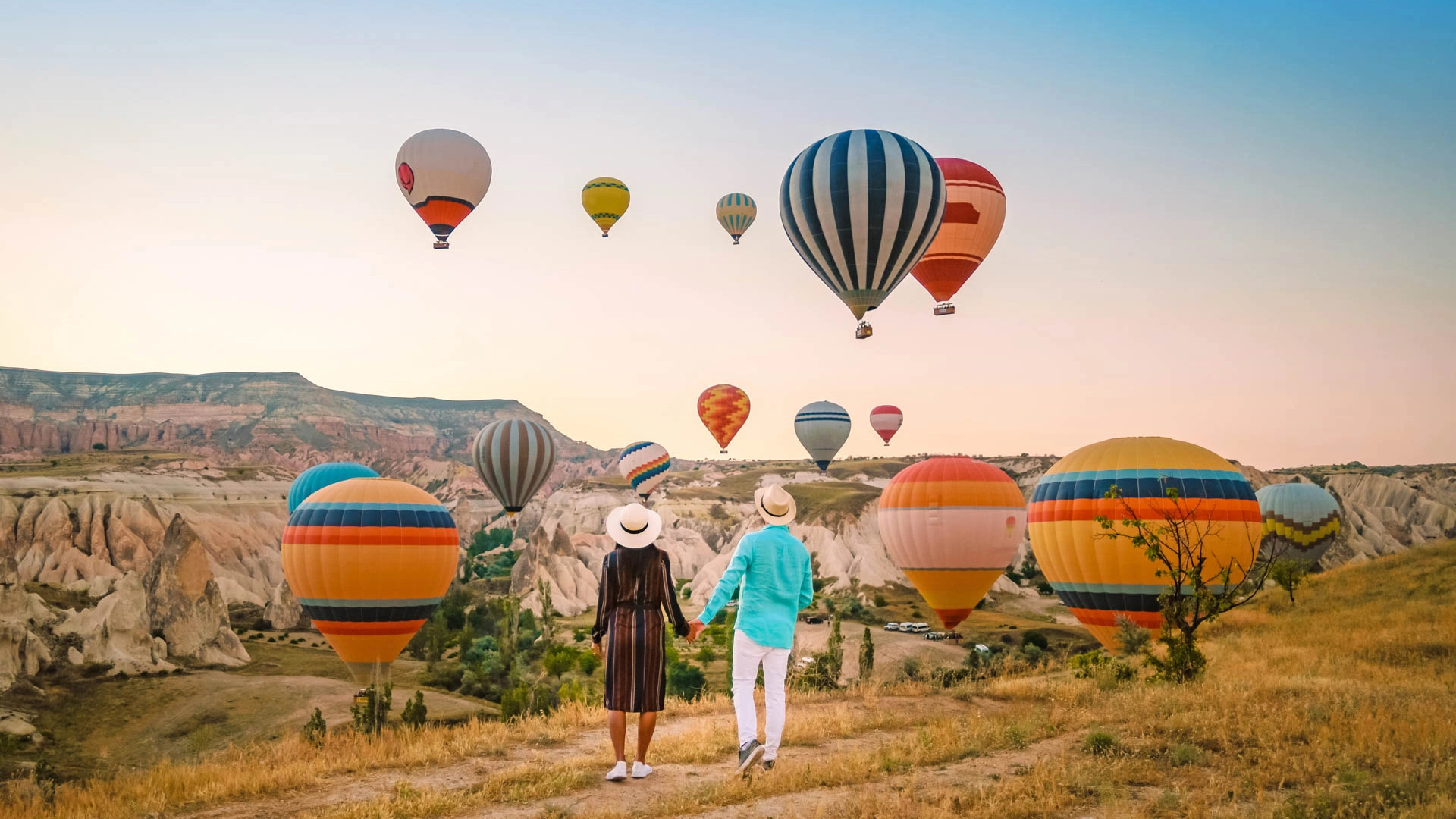
The balloon flight remains the region’s signature daybreak event. Prior to sunrise, crews prepare in the chill as burners flare and fabric swells across the launch field. Then the baskets lift, and the valleys open underneath. The ascent has been captured endlessly, yet the real thing tends to quiet everyone on board.
The Göreme Open-Air Museum gives the area’s Christian inheritance a clearer focus. Its rock-cut churches and monastic rooms preserve frescoes protected in shadowed interiors. Avanos, on the banks of the Kızılırmak River, has been known for ceramics since antiquity, using red clay drawn from the water by generations of makers. A meal centered on clay-pot testi kebab, flatbread, yogurt, dried fruit, and Anatolian wine returns attention to the table.
After stone churches, river clay, and food cooked in pottery, your hotel should belong to Cappadocia, not look imported from somewhere else. That is why the region’s cave properties make sense here. Many are built into or around the soft volcanic rock, turning carved rooms, stone walls, terraces, and fireplaces into the main design language. The best ones understand that little embellishment is needed. Mineral surfaces, woven textiles, and a view over the valleys can say more than imported glamour.
AMONG THE RUINS
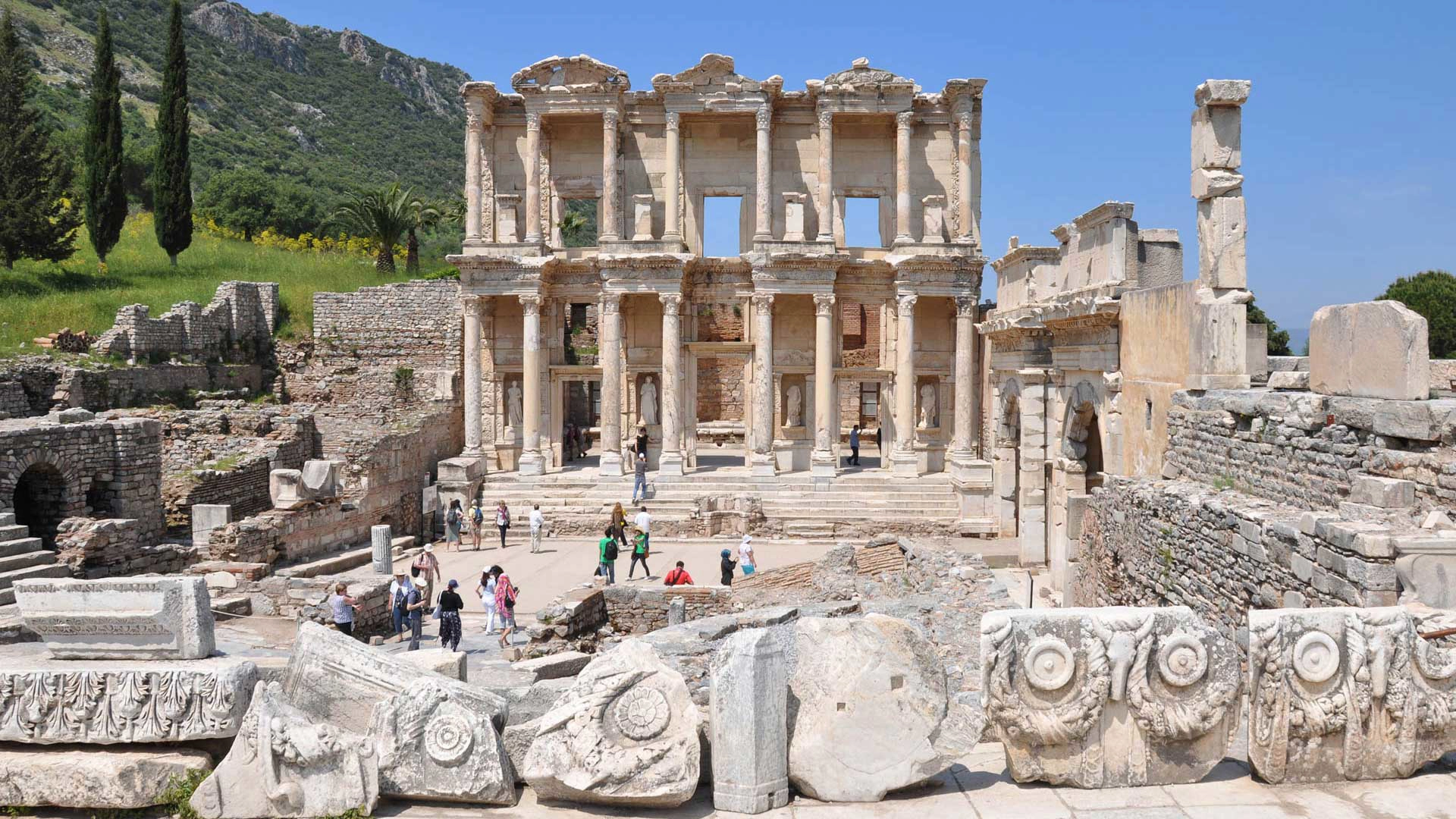
Ephesus requires little imagination. Its theater, Library of Celsus façade, baths, and columns suggest civic order interrupted, a city suspended rather than lost. Walking through it, visitors see more than fragments. Streets, houses, and common spaces give the classical setting a legible shape.
At its height under Roman rule, Ephesus was one of Asia Minor’s great urban centers, with a busy harbor that helped make it a major provincial hub. Completed in the second century AD, the Library of Celsus was commissioned by Gaius Julius Aquila as both a memorial to his father, Tiberius Julius Celsus Polemaeanus, and a scholarly collection. It held thousands of scrolls and was counted among the renowned libraries of antiquity. The Great Theater, with seating for about 24,000 people, is linked to the riot described in Acts 19, when silversmiths who made shrines of Artemis protested the spread of Paul’s teachings. The venue has also hosted performances in the modern era, giving the ancient site an unusual bridge to current life. Go early, while the marble still holds the morning cool.
After the library and theater, the Terrace Houses bring Ephesus down to a more intimate scale. These elite residences, constructed and expanded between the 1st and 3rd centuries, had running water, heating systems, mosaic floors, and painted interiors. They document the domestic world of wealthy residents with a vividness the monumental avenues cannot match.
Beyond the archaeological zone, Selçuk and Şirince add village lanes, small shops, regional wine, olive oil, and simple meals after the intensity of the excavation. Along the nearby shoreline, the outing can end with grilled fish before heading back. The ruins draw sightseers in, but the surrounding countryside rounds out the experience.
About an hour north of Ephesus, Izmir brings the Aegean back into view with a larger waterfront setting. Izmir Marriott Hotel sits in the heart of the city, overlooking the Aegean Sea, with uninterrupted sea views and 149 rooms, including seven suites. It gives travelers a full-service city hotel before or after touring Ephesus.
BY THE WATER
Bodrum knows how to deliver a finale. Whitewashed houses, clear bays, shore clubs, marinas, bougainvillea, and resort terraces embrace unhurried afternoons. The peninsula is built for fun and makes no apology for it. Yet an older record sits beside the water, too.Bodrum Castle commands the harbor with calm authority. Raised by the Knights of St. John between 1406 and 1522, the fortress incorporated blocks from the Mausoleum at Halicarnassus, one of the Seven Wonders of the Ancient World. Today, its ramparts contain the Museum of Underwater Archaeology, where shipwrecks and artifacts connect the town to the maritime archive of the Aegean and eastern Mediterranean. The Uluburun material is especially important. Discovered off Kaş in 1982 and excavated from 1984 to 1994, the Late Bronze Age find opened a rare window into trade, prestige goods, and seafaring more than 3,000 years in the past.
The town also occupies ancient Halicarnassus, birthplace of Herodotus. Born circa 484 BC, he is widely remembered as the father of history because he gathered accounts, weighed causes, and tried to understand human behavior through inquiry, even when not every source he recorded could be treated as settled fact. Seeing daily life unfold beside ancient landmarks keeps the destination from feeling frozen in the past. It can look like an easy ending, but leisure here carries real depth. People have traded, fought, sailed, and told stories on this ground for centuries.
After Istanbul, Cappadocia, and Ephesus, the peninsula becomes the natural conclusion for all that looking, walking, and moving. Caresse, a Luxury Collection Resort & Spa, Bodrum, gives the coastal portion a clear address. Rooms, suites, residences, and a villa look toward a tranquil bay, while the resort keeps the water close through its beach, pools, spa, and restaurants. The slower moments have somewhere to go, whether that means swimming, a treatment, lunch by the water, or a quiet return from the coast.
A gulet day is the classic indulgence, and it earns its reputation. The wooden vessel leaves the harbor, and the coastline slowly falls away. A swimming cove, a deck lunch, and an afternoon
that stretches. The pleasure is unforced, making one realize the importance of not accounting for every minute.
Evenings in Bodrum can be refined or relaxed as desired. Some nights belong to a lively meal near the marina. Others are better spent by the shoreline, with the table held well into the night. Olive oil, seafood, herbs, and small plates give the final stretch its Aegean character.By the final hours in Bodrum, the case for returning is already clear. Turkey shows only part of itself at the start, then keeps enough in reserve to make another itinerary seem necessary. The country does not shrink neatly into one visit, and trying to force it there only leaves too many places half-seen. The question is not only where to go, but what to save for next time.
Choose one of our incredible travel experiences.
Search for the local Affluent Traveler Specialist in your area.
Contact your local specialist and start planning.



The Affluent Traveler Collection is your “Your Guide to the Good Life.” Our renowned luxury travel specialists have one goal in mind, to create luxurious travel experiences that will inspire your mind, body and soul. Through long-standing relationships with the most upscale hotels, cruise lines, guided vacation companies and more, our travel specialists use their years of experience and product expertise to design a tailor-made vacation just for you.
Ready to be guided towards the vacation of your dreams? We’re ready to help get you there. To find an Affluent Traveler Collection travel specialist, click here.