
India does not merely preserve its history. It lets visitors step directly into it. The legacy remains bold, immediate, and alive. It can be found in a palace hotel lobby, a formal welcome, and a silver tray arriving at the perfect moment. India delivers all of that without blinking.
The subcontinent compels because that old world has not been packed away behind velvet ropes. It still influences the shape of capitals, the rituals of meals, textile and jewelry traditions, and the way guests are received.
You see it in sandstone ramparts above a town, in a garden where breakfast comes with birdsong and temple bells, and in a workshop where families have block-printed cotton by hand for generations. It is there, too, in the serious confidence with which India handles arrival. The effect is not distant. It is immaculate in some places, improvised in others, and often more interesting because of that friction.
That past appears in many forms, often side by side. Across Delhi, Agra, Jaipur, Jodhpur, and Udaipur, Mughal capitals and Rajput forts sit near lake palaces, bazaars, ateliers, jewelers, court-influenced meals, and ceremonial kitchens. The legacy continues through carved doorways, handwoven textiles, attentive service, and rituals honed over centuries.
THE ART OF ARRIVAL
Delhi offers a bracing introduction, refusing to let anyone settle in too easily. The first drive may move past a Mughal tomb to a government avenue, then into a buzzing market before you’ve fully caught up. That intensity is useful and thrilling. Delhi reminds visitors that power here was never only decorative. The Mughals, the imperial dynasty that ruled much of northern India for centuries, left Delhi and Agra with tombs, strongholds, and monuments that still define classic northern India. Authority was administrative, military, sacred, commercial, and theatrical all at once. It needed walls and gates as much as recordkeeping and spectacle.
Across India, a good private guide changes the trip. An Affluent Traveler Collection travel advisor, in coordination with OnLocation partner Big Five Tours & Expeditions, pairs guests with experts who know how to make Delhi less overwhelming without dulling its intensity. Humayun’s Tomb introduces gardened order before the Taj Mahal. Old Delhi pulls the imperial capital into the present, where tight lanes seem improvised at every turn. New Delhi presents a later version of authority, planned on a grand colonial scale and still carrying the machinery of government. I would not overstay Delhi on a first visit focused on India’s old seats of power, but I would not skip it either. It is the prologue with muscle.
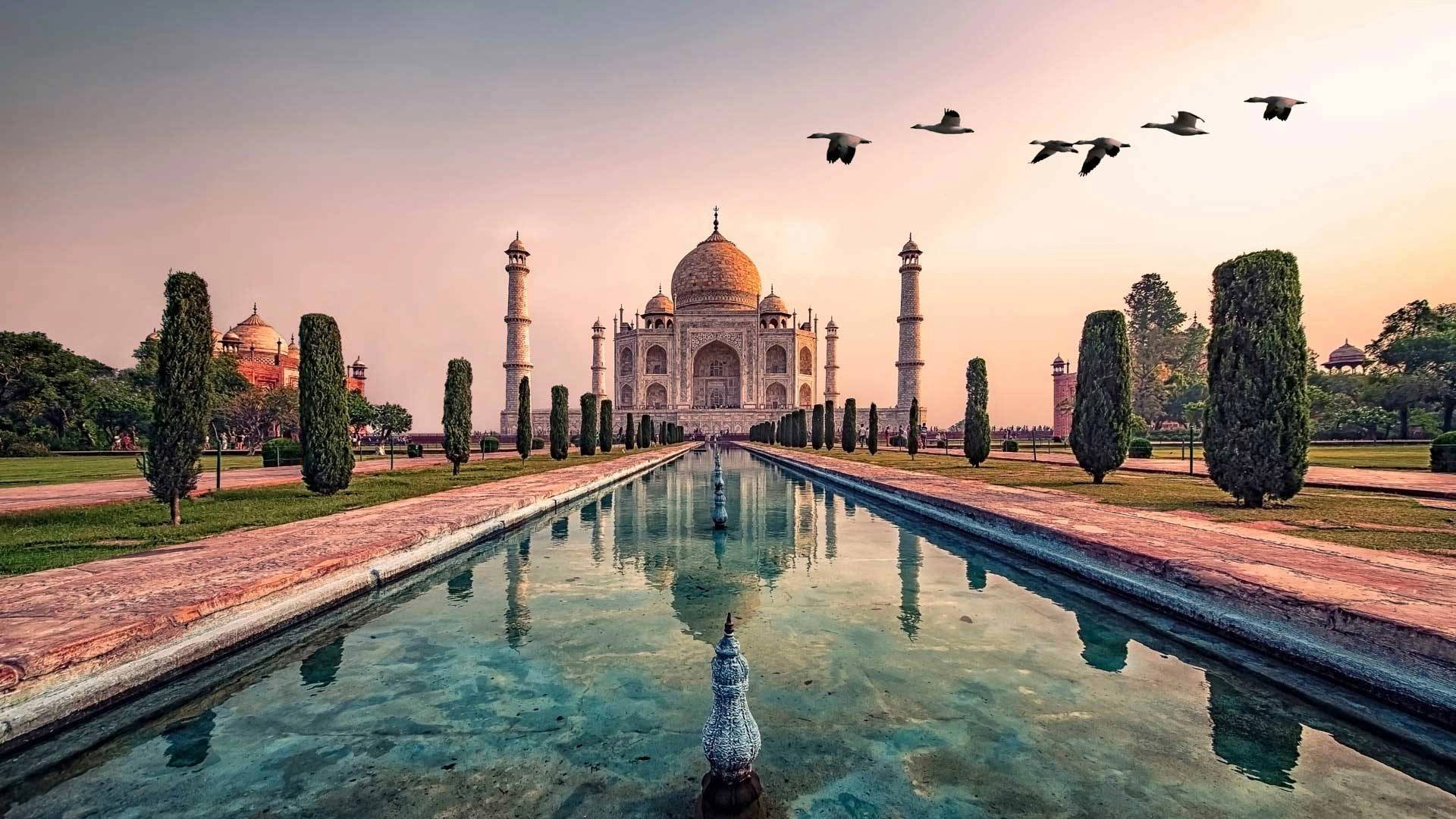
Agra, in Uttar Pradesh about 125 miles southeast of Delhi, is more concentrated, and that can be a blessing. Everyone is here for the Taj Mahal, which is both unavoidable and unfairly overexposed. You have seen it a thousand times before arrival, and then, annoyingly, it still overwhelms. The trick is timing. Go early, go with a guide who can explain what you are seeing, and do not let the visit become a race for the most impressive photograph. The Taj is not only romance cast in marble. It is grief, empire, money, control, and astonishing craft, softened by the fact that it is absurdly beautiful.
Agra Fort deserves attention in its own right, not the leftover slot after the Taj Mahal. Its red sandstone and marble spaces bring the Mughal era closer, from ceremony and military power to the private tensions of an imperial family.
BEYOND THE POSTCARD
The state of Rajasthan sits west of Agra in northwestern India, where desert cities and hilltop strongholds still carry the mark of former kingdoms. The colors grow warmer here, and the architecture turns defensive. History is seen in gates, bazaars, and walls designed to protect what was inside.
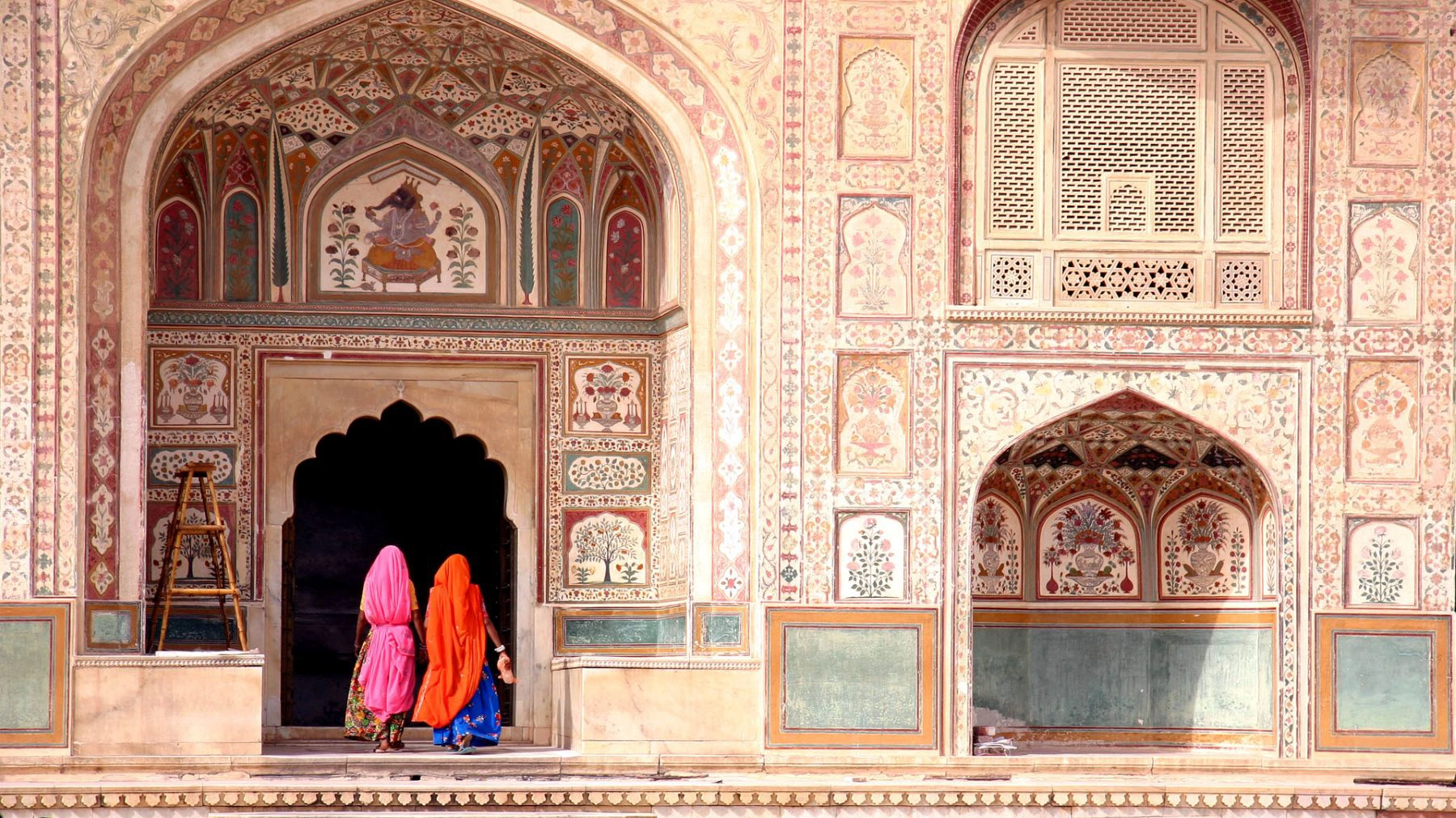
Jaipur is called the Pink City because Maharaja Ram Singh had it painted pink in 1876 to welcome the Prince of Wales. The color was associated with hospitality. It is proud and visually insistent. The capital was not accidentally accumulated, and that order is visible in its streets. Amber Palace supplies a grand Rajasthan moment, rising outside the center with halls, mirror detailing, ramparts, and long approaches that show how much ceremony once surrounded arrival. Back among daily traffic and markets, the City Palace keeps its regal past close to the usual urban impatience.
Extra time in Jaipur goes a long way. The monuments count, certainly, though the makers are just as important. Block printers, jewelers, enamel workers, miniature painters, and textile merchants keep the current charge. Royal patronage helped create these traditions, and they have survived because people still wear, buy, commission, repair, and argue over beautiful things. A private studio visit often teaches more than extra sightseeing. That is where taste starts to look less like style and more like inheritance. A good guide also keeps the experience from turning into junk, pressure, and intimidation.
Rajasthan’s cities are exhilarating and demanding, which gives accommodation choice real weight. A palace or fort hotel earns its spot here, with walls that were never simply decoration. They belong to the region’s political imagination. Six Senses Fort Barwara,set within a restored Rajasthani fort, belongs naturally in this stretch of Rajasthan. It pairs the architecture of a courtly world with the service, space, and wellness therapies that modern luxury guests expect. At the end of demanding days, the right hotel helps the trip become manageable, memorable, and worth lingering over.
From Jaipur, Jodhpur carries a rougher force. It sits beneath Mehrangarh Fort, one of those places where understatement feels pointless. It rises from the rock with such command that its importance is immediately clear. Inside, the rooms, palanquins, weapons, paintings, and ceremonial objects are impressive. Still, the real power is in the relationship between the stronghold above and the life below. Down from Mehrangarh Fort, Jodhpur spreads out in blue and cream, with customers bargaining and cooking smoke rising through the lanes.
This part of India gets cinematic very quickly, so the planning needs discipline. Dramatic walls and gates come first, followed by sunset terraces and clear signs of desert country. However, Jodhpur is not a film set. It is a living environment with schoolchildren, scooters, tailors, spice sellers, temple bells, and families who have heard everyone say, “Look at the blue.” The blue refers to Jodhpur’s painted houses, especially in the old quarter below Mehrangarh Fort. Meaningful moments here usually come when the place stops being treated as scenery and a guide leads the way through smaller lanes, stepwells, markets, and homes where hospitality has less streets, with water close enough to change the mood. Boats cross the lake. The City Palace runs along the waterfront in a long sweep of balconies, rooms, and terraces. At the right hotel, Lake Pichola is there from morning coffee through the last boat ride back.
Still, Udaipur should not be reduced to romance. It has political history, artistic traditions, temples, lived-in neighborhoods, and enough daily grit to keep all that beauty from becoming sweet. Mewar miniature painting is worth serious time here, especially with an expert who can explain the fine brushwork, mineral colors, and patronage behind it. The old quarter is best explored at an unhurried walk, with stops for tea, textiles, and small shrines tucked between shops. By this point, most visitors have learned the lesson. The great residence draws you in. The smaller moments keep you interested.
If the trip allows, one rural or wilderness stop adds a lot. Jaisalmer is the famous choice, with its golden fort, carved havelis (traditional mansions or large townhouses, often built by wealthy merchants or noble families), and dunes beyond the walls. It also adds distance and may pull attention from the core palace arc. For some, that trade-off is worthwhile. Others are better served in the countryside outside Jaipur or near Ranthambore National Park, where village visits, cooking, wildlife, horseback riding, and quiet evenings under a wide sky can round out the trip. The goal is not to add another impressive name. It is to show the land around the palaces, the communities linked to them, and the everyday life that clarifies the setting.
CUISINE, CRAFT, AND COURTLY DETAIL
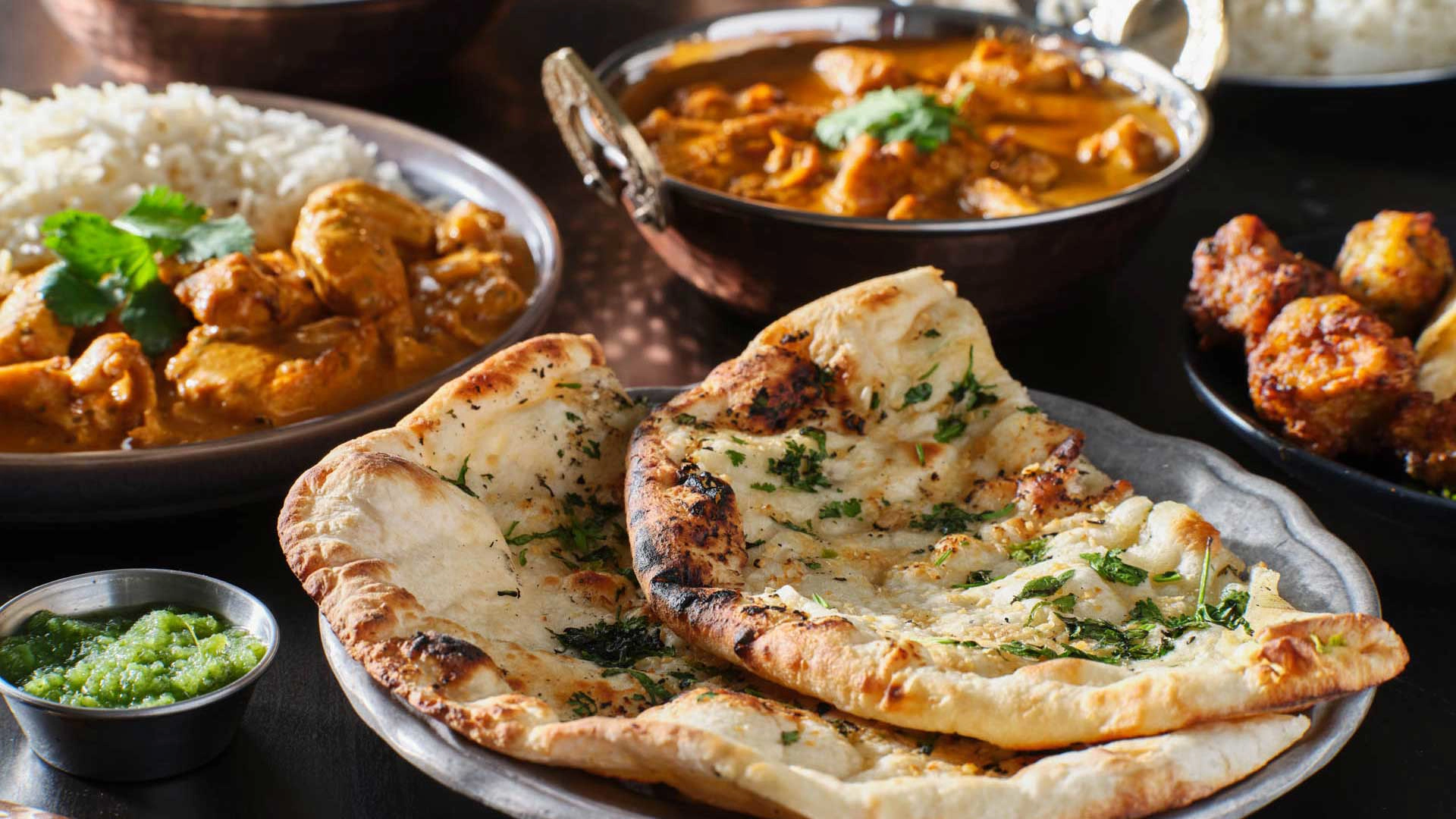
Food is essential on a trip through India’s former court cities. Dining here went far beyond abundance. It grew from the land as much as the palace, which is why the table changes so noticeably from one city to the next. Delhi and Agra introduce the Mughal side through tandoor breads, grilled meats, and warm, aromatic sauces. Rajasthan answers with a desert-minded kitchen, adapted to heat, scarce water, and dishes that could be preserved or carried. Laal maas, the state’s fiery red mutton curry, comes out of royal hunting traditions and a taste for bold, practical food. Dal baati churma combines lentils, baked wheat rolls, ghee, and sweet crushed wheat in a dish that is unmistakably Rajasthani. Sweets arrive with ceremony because celebration here has always made room for sugar.
While a traveler does not need a formal lecture at every meal, a little explanation goes a long way. Why this bread belongs with this curry. Why ghee anchors one kitchen. Why a family masala stays partly secret. The most memorable meals are not always the most ornate. Sometimes someone describes the plate before you eat, and the meal starts to reveal what shaped it.
Craft follows a similar logic. Jaipur jewelry, Rajasthani textiles, and Agra’s marble inlay connect visitors to skills that long outlived the dynasties that once supported them. Miniature painting, metalwork, and leatherwork can extend that encounter. Luxury travel moves beyond the showroom here. The strongest moments come from meeting the people behind the objects, so buying becomes less about pressure and more about understanding what is worth taking home.
Understand that India can thrill the eye and tax the body, which makes a restorative pause worth considering. For some, Six Senses Vana in Dehradun provides a quieter option. Set in the Himalayan foothills, it brings forest, wellness, and quiet before the adventure continues with renewed energy.
A DIFFERENT KIND OF GRANDEUR
India’s old seats of power extend well beyond the familiar northern tour. For a first-time trip with limited days, a clear focus usually serves travelers best. Rajasthan is not the only place where the country’s dynastic past left its mark. Orchha, in Madhya Pradesh, has a quieter pull, where riverside residences and cenotaphs sit apart from the usual crowd. Gwalior is more austere, its fort appearing to float above the city, with a musical lineage that makes a quick stop feel insufficient. Mysore has its own identity, with a palace still central to civic ceremonies and Dasara pageantry.
In Bengaluru, the mood leans contemporary. The Ritz-Carlton, Bangaloresituates guests in the middle of that energy, with strong dining and easy access to the city’s gardens before or after Mysore. JW Marriott Bengaluru Prestige Golfshire Resort & Spa offers a resort option near Nandi Hills, with golf, spa rejuvenation, and room to decompress. Together, the two properties give Bengaluru more purpose than a gateway stop. Mysore then restores ceremony, especially through Dasara and the city’s long association with silk and sandalwood.
GOOD TO KNOW
A complex country like India rewards planning that is specific, not fussy. Private guides are useful in Delhi, Agra, Jaipur, Jodhpur, and Udaipur because they know timing, crowds, access, and what travelers are seeing. See the Taj Mahal early in the morning, then give Agra Fort time of its own. It is too important to be squeezed in after the photograph.
Leave plenty of time between drives. Distances can look manageable on paper and feel very different on the road. Heat, traffic, security checks, festival crowds, and road conditions all affect the schedule. Wear light clothing, cover your shoulders at religious sites, and bring comfortable shoes and a hat. It is not glamorous advice, but it helps.
Reserve special experiences early on, especially private workshop visits, expert-led museum tours, palace dinners, and wellness appointments. Leave room for shopping, especially when it connects to a studio appointment or a specialist who can explain the work on display. India is full of beautiful art, and the better purchases usually happen with guidance on quality, materials, and fair pricing before the wallet comes out.
Choose one of our incredible travel experiences.
Search for the local Affluent Traveler Specialist in your area.
Contact your local specialist and start planning.



The Affluent Traveler Collection is your “Your Guide to the Good Life.” Our renowned luxury travel specialists have one goal in mind, to create luxurious travel experiences that will inspire your mind, body and soul. Through long-standing relationships with the most upscale hotels, cruise lines, guided vacation companies and more, our travel specialists use their years of experience and product expertise to design a tailor-made vacation just for you.
Ready to be guided towards the vacation of your dreams? We’re ready to help get you there. To find an Affluent Traveler Collection travel specialist, click here.